
What changes when a second company signs up for your HR service?
The second client gets a separate workspace and subscription. The agency still maintains one application and one shared database.

Picture a distributor and a cleaning contractor buying the same attendance plan. The distributor needs its own staff list and customer visits. The contractor needs its own shifts and absence records. Neither wants the other's employee records appearing in search.
Use two workspaces for the demonstration
In Open Core HR SaaS the operator manages customers, plans and billing from the platform console. Each customer has its own users, HR records, files and settings within one shared database. One workspace has one subscription. If a prospect requires a dedicated database and independent backup for every company, discuss separate installations before agreeing the architecture.
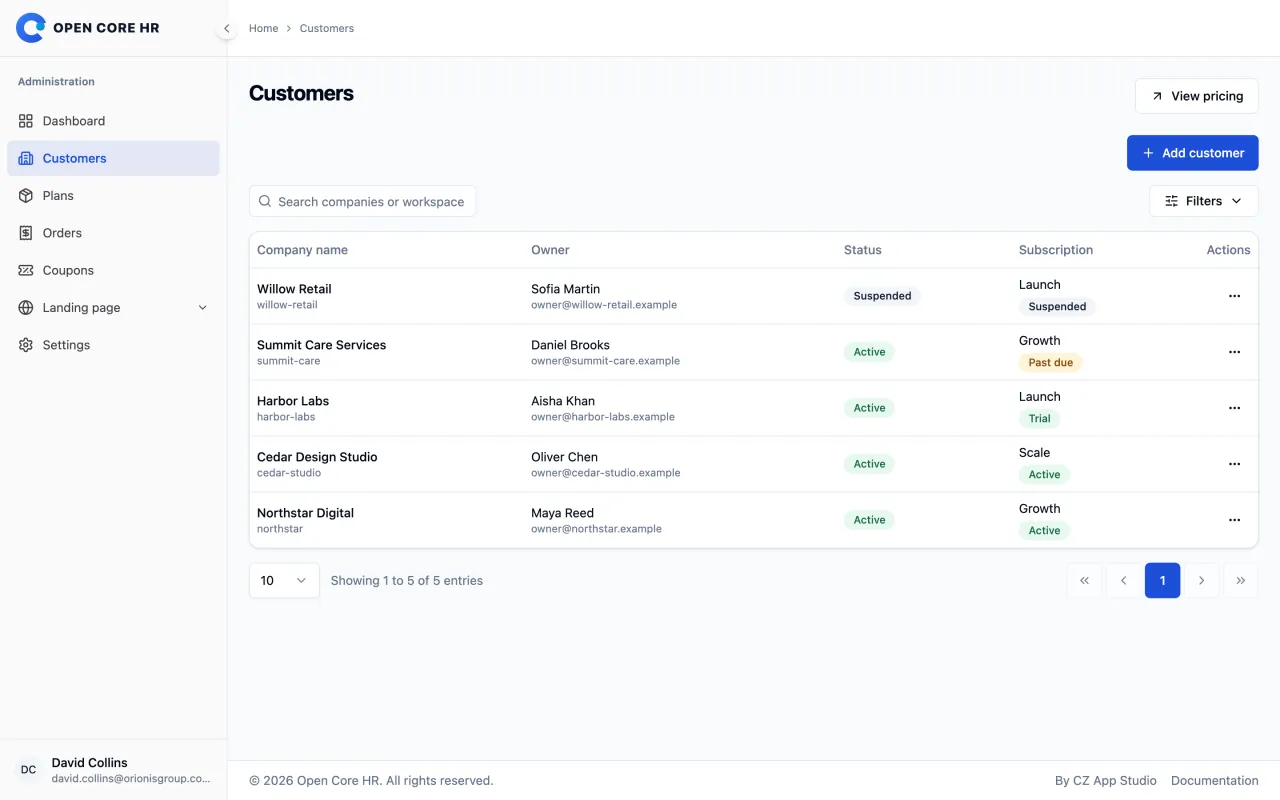
Give the two sample companies recognizably different names. Enter a fictional employee in each. Open the distributor as its administrator and check the directory, team attendance, customer list and files. Then repeat as the contractor. Demonstrate the operator's customer list separately, using an operator login. The roles answer different questions and deserve separate browser windows.
What the agency shares across customers
The operator maintains the application, outgoing email, push configuration and backups. A new company does not bring a second copy of the application that it can update independently. If you offer hosted AI features, you also connect the provider account and decide which licensed features go into each plan.
Write down the client's administrator, the agency's support contact, the plan limits and how to renew. Those four details make the second handover much easier than hunting through the original sales conversation. Open the SaaS hosting and workspace guide.

Comments 0
No comments yet. Start the conversation.